
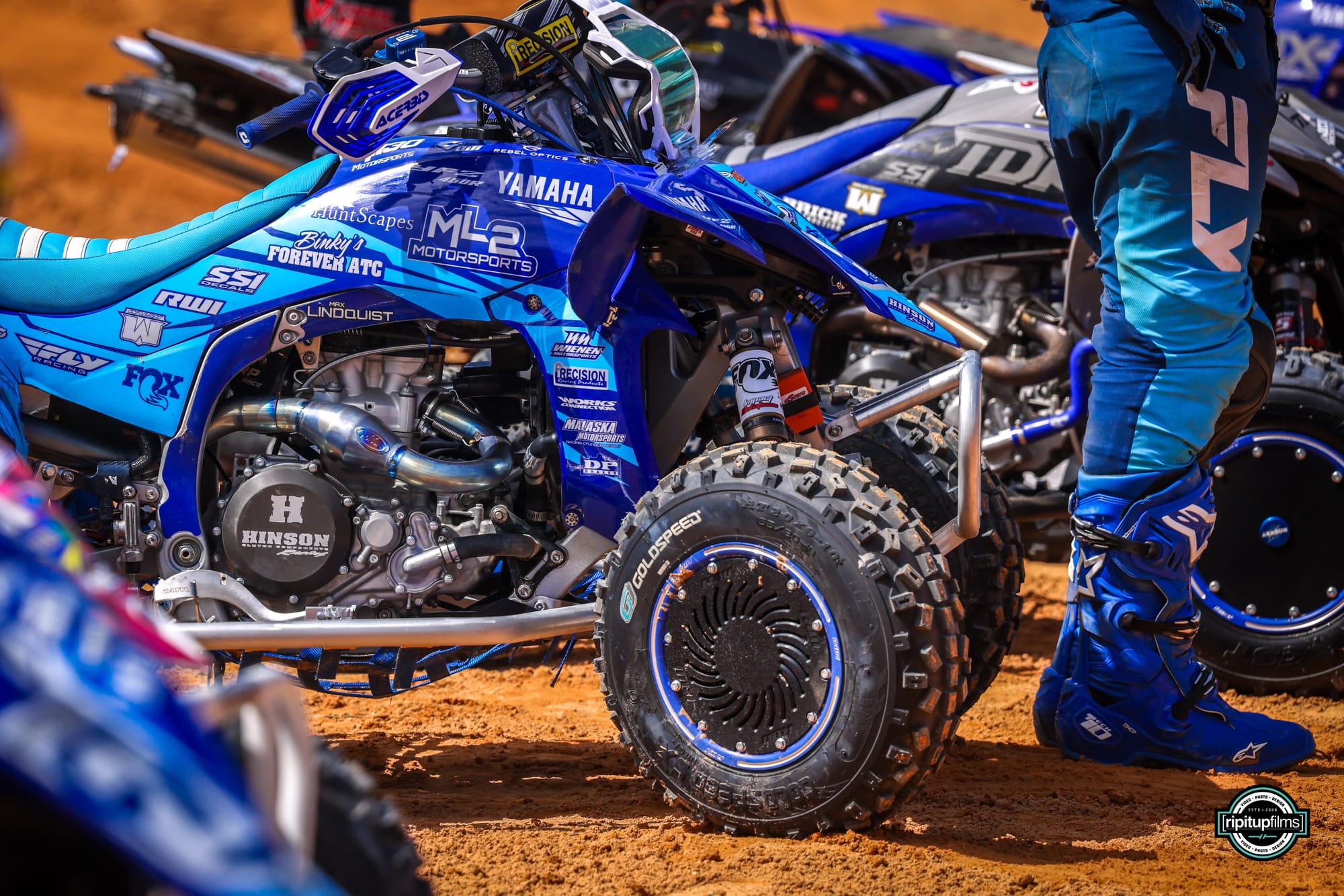
ATV Wheel Size Guide
Diameter first, width second, both in inches. Here is what each number changes on the machine — and why your front and rear should not match.
On this page
A wheel size is two numbers and a letter x. It is the least mysterious spec on the wheel, and it is still the one people order wrong most often — usually because they matched the rear when they should have matched the front, or because they never checked what the tyre they already own actually wants to sit on.
Here is how the notation works, what each dimension changes about the way the quad rides, and how the RWI range is laid out so you can pick without guessing.
Reading 10x5 and 9x9
The first number is the rim diameter in inches. The second is the rim width in inches, measured bead seat to bead seat. So a 10x5 is a 10 inch wheel that is 5 inches wide, and a 9x9 is a 9 inch wheel that is 9 inches wide — as wide as it is tall.
Most RWI wheels carry a third figure in brackets, like 10x5 (4+1). That is the offset, and it tells you where the hub mounting face sits inside those 5 inches. It is a separate decision from size and it has its own guide: ATV wheel offset explained.
Why the front and rear are not the same size
On a sport quad the front and rear wheels are asked for opposite things. The front has to turn, change direction and give you feedback. The rear has to put power down and hold a line.
So the front runs narrow. A narrow front tyre knifes into a rut, changes direction with less effort, and does not fight you when the ground is rough. It also carries less rotating weight at the end of the machine that has to be steered.
The rear runs wide. A wide rear tyre puts a bigger contact patch on the ground for drive and gives the machine a stable platform to hang off in a corner. That is why every RWI front is 5 inches wide and every RWI rear is 8 or 9 inches wide — not a styling choice, just the two jobs being different.
The RWI size range
| Wheel | End | Diameter | Width | Notes |
|---|---|---|---|---|
| 10x5 (4+1) | Front | 10" | 5" | Available as a beadlock and as the R6 rolled lip |
| 10x5 (3+2) | Front | 10" | 5" | Same size, sits an inch further outboard |
| 8x8 (3+5) | Rear | 8" | 8" | The smallest diameter rear |
| 9x8 (3+5) | Rear | 9" | 8" | The common sport quad rear |
| 10x8 (3+5) | Rear | 10" | 8" | Largest diameter at 8 wide |
| 9x9 (4+5) | Rear | 9" | 9" | The double beadlock — clamps the inner and outer bead |
Every size above is a live part in beadlock wheels or rolled lip wheels.
What diameter changes
Rim diameter decides which tyres you can fit and how much sidewall sits between the rim and the ground for a given overall tyre height.
- A smaller rim under the same tyre height means more sidewall. More sidewall flexes more, which soaks up square edges and helps the tyre conform to rocks — the reason a lot of woods racers like a smaller rear rim.
- A larger rim means less sidewall. That is more precise and less prone to squirming under load, which suits hard-packed motocross tracks where you want the machine to do exactly what you asked.
- Diameter also sets your beadlock ring size. Ring size follows the first number in the wheel name: a 10x5 or 10x8 takes a 10 inch ring, a 9x8 or 9x9 takes a 9 inch, an 8x8 takes an 8 inch. Replacements live in wheel accessories.
What width changes
Rim width sets how the tyre is held across its tread. Mount a tyre on a rim narrower than it wants and the tread crowns — the centre bulges, the shoulders lift, and you lose contact patch exactly where you were trying to gain grip. Mount it on a rim wider than it wants and the tread flattens while the sidewall and bead sit more exposed to impacts.
Every tyre manufacturer publishes an approved rim width range for each tyre. Check the tyre you intend to run against the wheel before you order, not after, and stay inside that range. It costs you nothing and it is the single most common way a good wheel gets blamed for a bad setup.
Width also drives track width at the rear, and the offset decides which direction that extra width goes. A wider rim with the same offset pushes the tyre further outboard, so check clearance to the chain, the brake caliper and the fender with the tyre fitted.
Clearance and class rules
Two checks people skip. First, physical clearance: with the wheel and tyre on and the suspension compressed through its travel, nothing should touch an A-arm, a shock body, the chain, a brake line or the inside of a fender. Do it on a stand before you do it at speed.
Second, the rulebook. Some series regulate maximum overall width. If you race, confirm your combination against your class rules before you build a setup around it, because a machine that fails tech is slower than any wheel choice you could have made.
Picking a size without second-guessing it
- 01Start with fitment. Run your year, make and model through the fitment guide — it returns the bolt pattern and sizing for your machine and lists the RWI wheels that match.
- 02Confirm the bolt pattern separately if you are buying used or crossing machines: ATV bolt patterns explained.
- 03Check your existing tyres against the rim width you are considering, using the tyre maker’s approved range.
- 04Decide beadlock or rolled lip on how low you run pressure, not on what looks fastest: beadlock vs rolled lip.
- 05If you would rather have the combination chosen for you, buy a race wheel kit. Each kit is a matched front and rear package sized for the discipline it is named after.
Common questions
The first number is the rim diameter in inches and the second is the rim width in inches. A 10x5 is a 10 inch diameter wheel that is 5 inches wide. A bracketed figure after it, such as (4+1), is the offset rather than part of the size.
Yes, and on a sport quad you should. Narrow fronts steer more easily and carry less rotating weight where it matters most; wide rears put more rubber down for drive and stability. Every RWI front is 5 inches wide and every RWI rear is 8 or 9 inches wide for that reason.
Match the ring to the first number in the wheel name. A 10x5 or 10x8 wheel takes a 10 inch ring, a 9x8 or 9x9 takes a 9 inch, and an 8x8 takes an 8 inch. Note that the 9x9 (4+5) double beadlock uses two rings on a single wheel.
It changes the trade-off rather than improving it outright. A larger rim under the same tyre height leaves less sidewall, which is more precise on hard pack but less forgiving over square-edged hits. A smaller rim leaves more sidewall to soak up rocks and roots. Pick for the terrain you actually ride.
Tyre manufacturers publish an approved rim width range for every tyre. Check the tyre you plan to run against the wheel width before ordering. Too narrow a rim crowns the tread and shrinks the contact patch; too wide a rim flattens it and leaves the bead and sidewall more exposed.